Answer first
How does an adaptive MCAT study plan work?
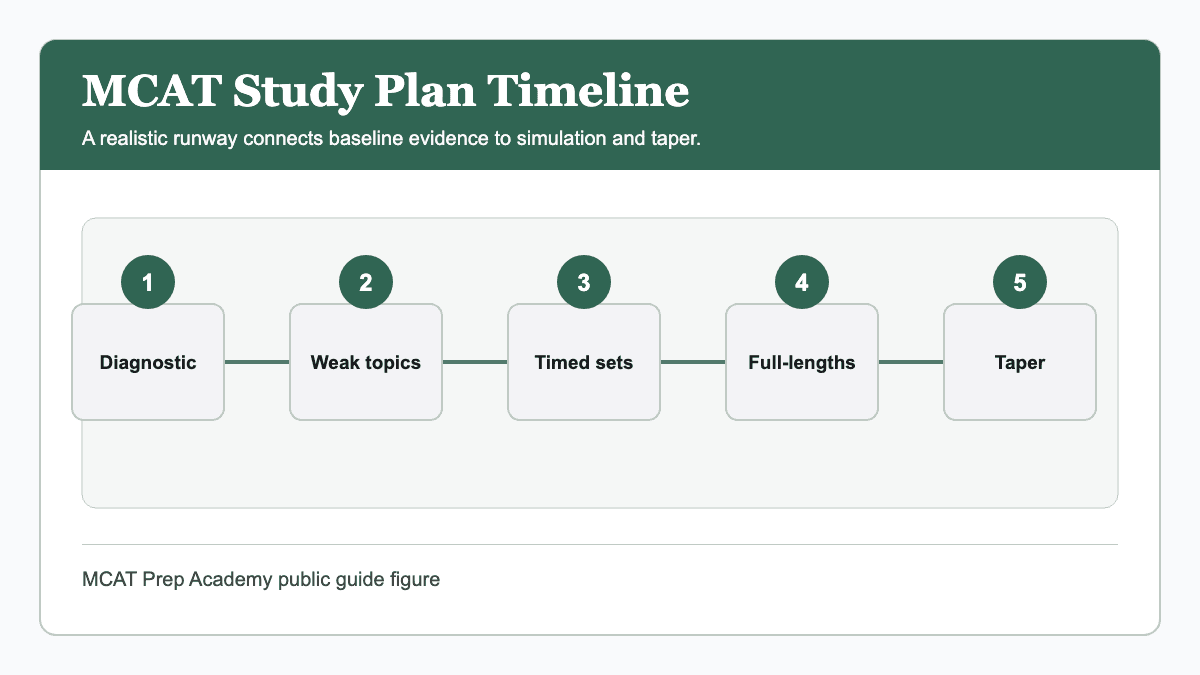
An adaptive MCAT study plan starts with constraints such as test date, target score, weekly hours, and baseline performance, then changes as evidence appears. A static plan says what to study every day regardless of results. An adaptive plan uses missed questions, section trends, recall strength, CARS pacing, and full-length review to decide what deserves more time. The structure still matters: most students need content coverage, passage practice, spaced review, full-length simulations, and tapering. The difference is that weak-topic evidence changes the allocation inside those phases. If CARS timing is stable but B/B passages keep exposing amino acid or enzyme-kinetics misses, the next blocks should shift toward targeted B/B work rather than generic review. The plan remains realistic only if it respects official test dates and score release timing.
Practical examples
Two low science sections
Keep daily CARS light, then assign targeted B/B and C/P blocks until repeated miss categories fall below the weekly threshold.
Good content, weak stamina
Shift the plan toward timed passages, full-length review, and recovery windows instead of adding more reading.
Core inputs
The minimum inputs are target score, target test month or date, weekly hours, baseline score, and recurring weak areas. Without those, a plan can look polished while being impossible to execute.
Review loop
Every missed question should produce a category, a one-sentence rule, and a next action. That keeps adaptation specific instead of reactive.
Practical comparison
| Signal | How to use it |
|---|---|
| Static planner | Easy to start, but weak at reacting to repeated errors. |
| Adaptive planner | More useful after practice data exists because it changes priority based on evidence. |
Methodology and limits
Adaptation rule
A plan changes only when recent evidence changes the next best action: score trend, miss type, recall strength, pacing, or calendar risk.
Sources and review notes
Last reviewed July 18, 2026. Timing and admissions claims should be verified against the official source before a student makes a test date or application decision.