Planning example
A low diagnostic with mostly content misses should lengthen the runway before aggressive simulation starts.
Glossary term
A baseline score used to identify starting strengths, weaknesses, pacing risk, and study-plan priorities.
A baseline score used to identify starting strengths, weaknesses, pacing risk, and study-plan priorities.
A diagnostic score should start planning, not label a final outcome. The useful output is a map of section imbalance, content gaps, timing pressure, and review priorities.
Students should treat early diagnostic results as noisy if they used unfamiliar timing, skipped review, or had not yet learned core content. Later full-length exams provide stronger trend evidence.
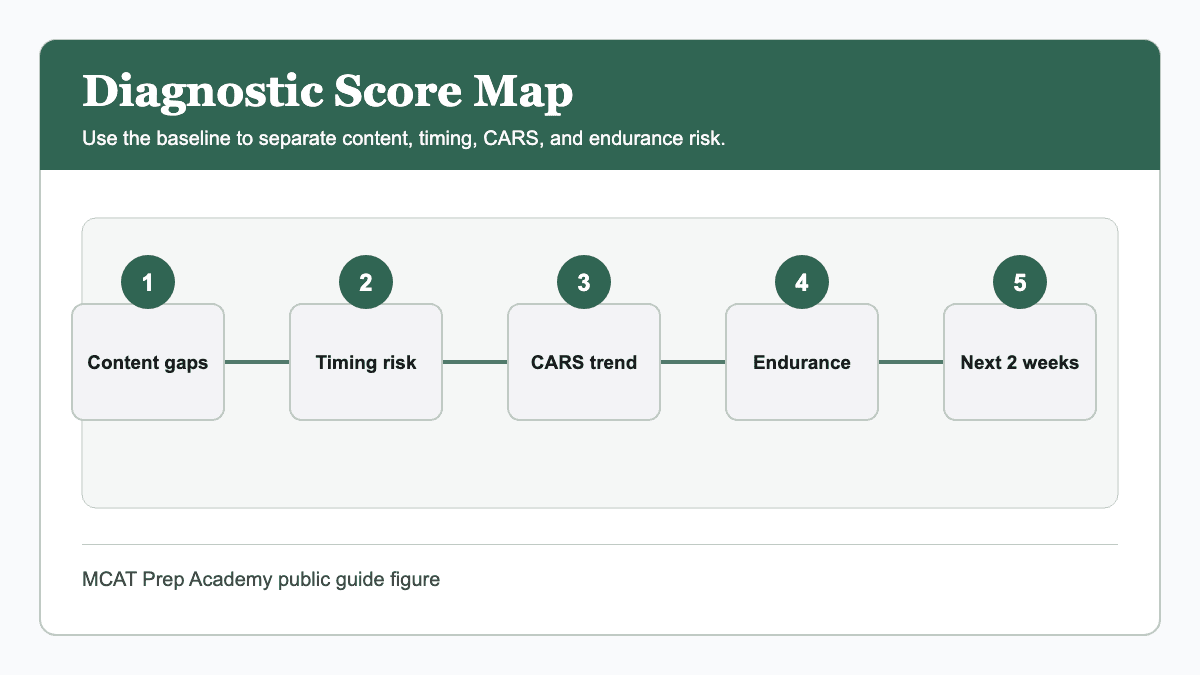
A low diagnostic with mostly content misses should lengthen the runway before aggressive simulation starts.
Diagnostic score examples are planning heuristics and should be interpreted alongside later full-length trends.