Answer first
When should you retake the MCAT?
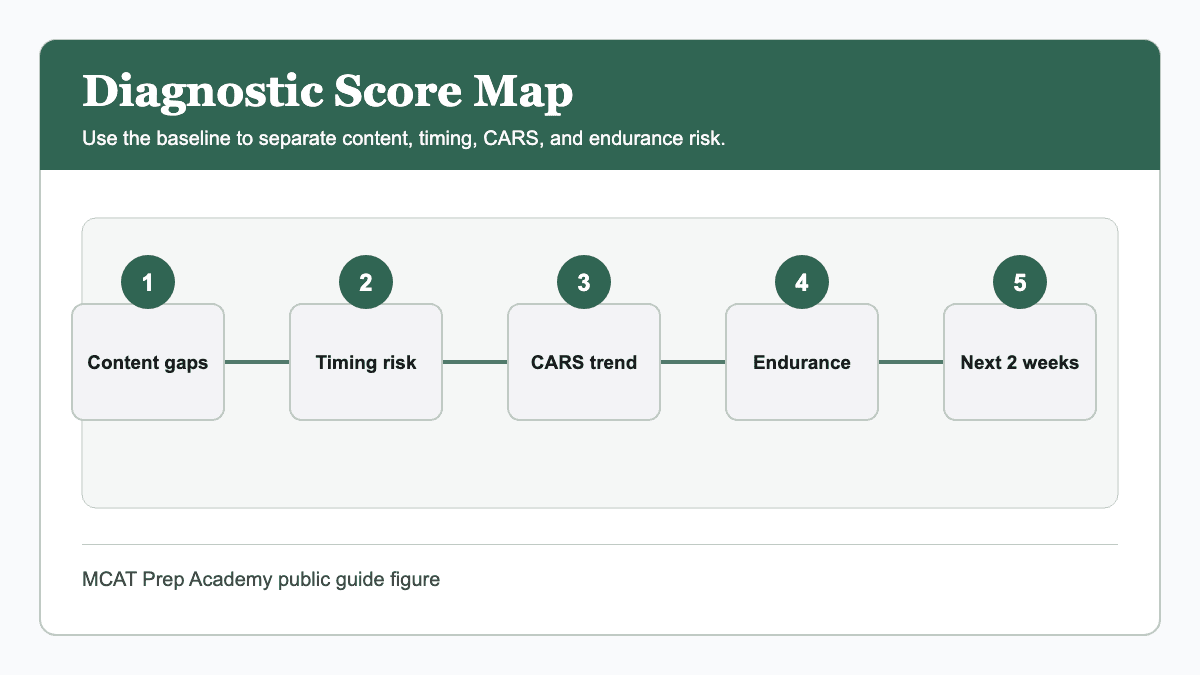
A retake makes sense when the expected score gain is large enough to change the application outcome and the timing still fits the application cycle. The decision should not be based only on disappointment. Start with the score report: identify whether the gap is concentrated in one section, repeated across science passages, or driven by CARS timing and endurance. Then compare the official score release date with AMCAS and school-specific deadlines. A late retake can help if schools will receive the score in time and the rest of the application is ready. It can hurt if it delays submission, secondaries, or school-list decisions without a realistic improvement plan. The safest retake plan has a clear error pattern, enough weeks for correction, and at least one practice trend showing the new target is plausible.
Practical examples
Section-specific retake
If C/P is the only weak section, the retake plan should protect other sections while drilling the repeated C/P miss categories.
Calendar-constrained retake
If the new score would arrive late, compare the official release date against school deadlines before registering.
Retake decision criteria
Use three gates: score gap, evidence of fixable causes, and calendar feasibility. If one gate fails, consider applying with the current score or delaying the cycle.
Retake study structure
Spend the first week classifying errors, the middle weeks drilling the highest-repeat categories, and the final stretch on test-condition simulation and score-release planning.
Methodology and limits
Retake rule
A retake plan needs a fixable error pattern, enough weeks to change it, and practice evidence that the new target is plausible.
Sources and review notes
Last reviewed July 18, 2026. Timing and admissions claims should be verified against the official source before a student makes a test date or application decision.