High-yield review
Contrast similar terms in pairs and map scenario clues to the theory or research method being tested.
MCAT subject hub
Public psych/soc overview for behavior, cognition, identity, social structure, and research methods.
Psych/soc rewards precise term contrast and clean mapping between scenario details and theory. Use this page as a public overview. Full lesson flows, quizzes, and account progress stay inside the private app, while these edited guide links give crawlers and students enough context to understand the topic area before signup.
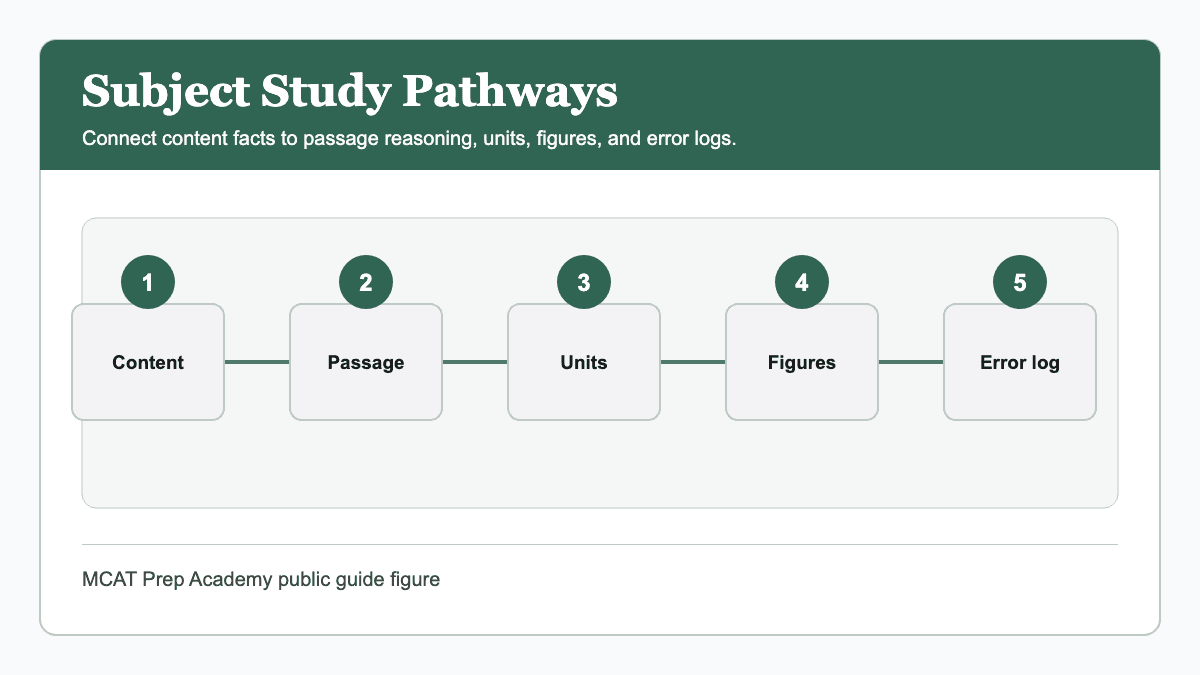
Contrast similar terms in pairs and map scenario clues to the theory or research method being tested.
Use official AAMC behavioral science scope and prioritize precise term contrast over broad definition drilling.
A working map of how the nervous system is organized — from the CNS-PNS split down to sympathetic and parasympathetic control of every major organ.
8 min read
A working map of hindbrain, midbrain, and forebrain plus the four cortical lobes, tuned to the patterns the exam actually tests.
9 min read
A mechanism-first tour of the major MCAT neurotransmitters, the receptors they bind, and how that pairing predicts behavior and drug effects.
9 min read
A working map of how hormones tune behavior — stress, mood, bonding, aggression, and circadian rhythm — with the HPA axis at the center.
8 min read
A first-principles walk through the hypothalamic-pituitary-adrenal cascade, from acute cortisol release to the long-term costs of chronic activation.
8 min read
How the amygdala, hippocampus, and connected forebrain structures generate emotion, lock memory to feeling, and shape behavior on test day.
9 min read
How the brain builds itself before birth, refines its wiring through pruning and myelination, and keeps rewriting synapses across the lifespan.
10 min read
How twin studies, heritability math, gene-by-environment interactions, and epigenetic marks explain why behavior is neither pure nature nor pure nurture.
9 min read